What Really Goes Into Designing a Modern Hospital?
December 4, 2025How to Renovate an Old Hospital Without Disrupting Patient Care
February 20, 2026The First Question Everyone Asks About Hospital Construction
If you’ve ever seriously thought about building a hospital—maybe scribbled a few numbers on paper, or had a late-night conversation with a partner or investor—you’ve probably asked the same uncomfortable question: How much money do we actually need? Not a brochure number. Not a rough estimate tossed around at conferences. The real number. The kind that keeps you awake at 2 a.m.
In actuality, building a hospital is more than just costly. It has layers. It’s sentimental. It’s full of choices that, although seemingly insignificant on paper, drastically alter your budget. And the difficult part? The majority of people initially underestimate it—not because they are irresponsible, but rather because they are unaware of what they do not yet know.
Why There’s No Single “Correct” Budget
You’ll hear statements like “It’s about Y per square foot” or “A hospital costs X per bed.” That’s not incorrect, but it’s also not the whole picture. A hospital is not a storage facility. It’s not even an office building with more sophisticated plumbing. It’s a living system. Patients move through it. Staff rely on it. Regulations hover over every inch.
Therefore, the most truthful response to the question of how much money is required is: It depends. On size. On services. On location. On ambition. And, sometimes, on how many mistakes you’re willing to make along the way.
Starting With the Vision (This Is Where Money Begins)
Before any numbers make sense, you need clarity. What kind of hospital are you building? Is it:
- A small specialty center?
- A mid-sized multi-specialty hospital?
- A full-scale tertiary care facility?
Each choice quietly multiplies the cost. A hospital with 200 beds acts very differently than one with 30. The curve abruptly bends upward when an intensive care unit is added. Power backups, cooling systems, and structural requirements all become much more important when sophisticated diagnostics are added.
Many budgets collapse early because the vision wasn’t stable. One month it’s “basic.” The next month it’s “future-ready.” That gap costs money.
Land: The Cost Before the Cost
It is not appropriate to treat land as a distinct topic of discussion. It establishes the tone for all subsequent events.
Urban land is accessible but costly. Although semi-urban land is less expensive, it might require more infrastructure. Before you consider roads, utilities, and approvals, rural land appears to be reasonably priced. In certain cases, the cost of the land itself is less than the cost of converting it into usable land.
And don’t forget zoning. A piece of land that looks perfect can quietly drain your budget if it needs reclassification or special permissions.
Design and Planning: Where Good Decisions Save Money
This is where people often try to save—and where they shouldn’t. Planning isn’t decoration. It’s strategy.
A well-thought-out layout reduces wasted space, improves patient flow, and cuts long-term operational costs. A poorly planned one locks you into inefficiencies that you’ll pay for every single day.
Design costs may feel high upfront, but they’re small compared to the price of redesigning corridors, shifting departments, or fixing compliance issues later. In hospital projects, planning isn’t an expense. It’s insurance.
Construction Costs: The Big, Visible Number
This is the part most people focus on. Concrete. Steel. Walls. Floors. It’s tangible, and it feels like progress.But even here, the range is wide. Construction cost depends on:
- Structural complexity
- Number of floors
- Seismic requirements
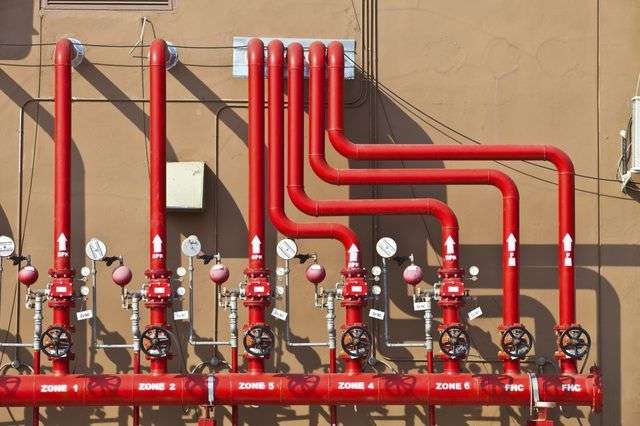
- Fire safety systems
- Quality of materials
Hospitals require stronger slabs, wider corridors, and specialized finishes. Infection control alone changes flooring, wall treatments, and air-handling systems. These aren’t upgrades. They’re necessities.
Interiors: Where Budgets Quietly Slip
Interiors don’t just mean aesthetics. They mean functionality.
Nurse stations, patient rooms, waiting areas, operating theaters—each has specific requirements. Medical-grade finishes cost more. Custom furniture costs more. And once people see the space taking shape, the temptation to “improve just one thing” grows.
This is where discipline matters. A hundred small upgrades can quietly add up to a massive overrun.
Medical Equipment: The Second Mountain
Construction builds the shell. Equipment brings it to life.
This includes:
- Diagnostic machines
- Operation theater equipment
- ICU beds and monitors
- Sterilization systems
- Lab equipment
Equipment budgets often rival construction costs. Worse, they fluctuate with technology and exchange rates. What looked affordable during planning can become expensive by the time procurement begins.
A common mistake is buying equipment too early or too late. Timing matters more than people expect.
Compliance and Licensing: The Invisible Cost
Approvals don’t pour concrete, but they drain time and money.
Fire clearances, health department approvals, pollution control, accreditation standards—each comes with its own requirements. Some require physical changes. Some demand documentation. All of them cost something. Skipping this conversation early usually leads to expensive corrections later. Compliance is boring, yes—but it’s also unavoidable.
Staffing and Pre-Opening Costs
A hospital doesn’t open the day construction ends. There’s a gap. And that gap costs money.
Recruitment, training, trial runs, soft launches—all of this happens before revenue starts flowing. Salaries begin. Utilities run. Consumables are used. This pre-opening phase is often underestimated, but it can stretch for months.
Financial planning that ignores this phase creates panic later.
Technology and Systems: More Than Just Computers
Hospitals run on systems. Information systems. Billing systems. Clinical records. Security systems.
These aren’t optional anymore. And they’re not cheap. Implementation takes time, customization, and training. It’s another layer that doesn’t look dramatic from the outside but is critical on the inside.
The Buffer Nobody Wants but Everyone Needs
Here’s a hard truth: something will go wrong.
Material prices rise. Regulations change. A design assumption turns out to be flawed. Delays happen. Weather interferes. People leave.
A contingency buffer isn’t pessimism. It’s realism. Without it, even a well-planned project can stumble badly.
So… What’s the Real Number?
If you’re hoping for a neat final figure, this might be disappointing. There isn’t one. But there is a range—and more importantly, there’s a way to think about it.
A hospital budget is not just about building costs. It’s about:
- Vision clarity
- Planning quality
- Timing
- Discipline
- And patience
The more thoughtful you are early, the less painful the later stages become.
A Personal Observation
I’ve noticed something interesting over the years. The most successful hospital projects aren’t always the biggest or the most expensive. They’re the ones where decision-makers stayed curious. Asked uncomfortable questions. And resisted the urge to rush.
Money matters, obviously. But how you think about the money matters just as much.
The Role of Expertise (Without Naming Names)
At some point, most hospital founders realize they can’t do this alone. Not because they lack intelligence, but because the system is too complex. Coordinating architects, engineers, contractors, vendors, and regulators is a full-time job.
This is where working with an experienced Hospital Construction company often becomes less of a cost and more of a stabilizing force. Not to spend more—but to avoid spending badly.
One Last Thought Before You Commit
Building a hospital is not just a financial project. It’s a responsibility. People will be born there. Healed there. Sometimes, say goodbye there. The walls will hold more than equipment; they’ll hold stories.And that’s why the final decision isn’t just about how much money you need—but how thoughtfully you’re willing to spend it. Choosing the right partners, including the right Hospital Construction company, can make the difference between a project that merely opens and one that truly lasts.